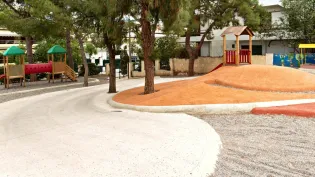


One of the key areas of our activity is raw material extraction for our products. The objective of any quarry rehabilitation is to deliver to the community an area with enhanced biodiversity, depending on the pre-intervention its condition and improve the landscape following the intervention.
A biodiversity management system |
|
|
Lafarge has established a comprehensive biodiversity management system in partnership with the WWF:
The objective is to work with local experts and environmental associations to establish biodiversity programs for all sites located in a sensitive area or presenting real potential for wildlife.
For many decades, the Group has applied techniques ensuring that quarries are selected, planned and rehabilitated on strict standards. Some of these quarries are currently ecological parks, farms or forests thanks to the skills and experience of Lafarge people.
The rehabilitation plan for each quarry should take into account the following parameters: environmental specificities, such as biodiversity, water, soil, topography; applicable legislation in each country; perspectives of stakeholders (property owners, neighbours, local authorities and environmental organisations).
In partnership with the WWF Lafarge has also developed a biodiversity index to monitor and track ecological changes at the Group's quarries and sites. Criteria include:
The ratings underpin action programs.
In 2010:
|
Almyros limestone quarry, Magnesia The rehabilitation planThe elaboration of a quarry rehabilitation plan includes five stages: 1. Identify the purpose of the rehabilitation 2. Define the indices and targets 3. Identify the person responsible to monitor the indices and the way 4. Record and analyse the results 5. Use information for improvement and report. Rehabilitation may be in four forms
|
Collaboration with WWF International |
|
|
Lafarge and WWF have been global partners since 2000, in an effort to maintain biodiversity and restore the forest landscape. In the context of this partnership, Lafarge has supported the Forest Landscape Restoration Programme of WWF International, which is part of the Forest For Life Programme. WWF International was a member of SQRP (Strategic Quarry Rehabilitation Project), which developed the principles for the rehabilitation of quarries that have been adopted by all Lafarge operations. |
Biodiversity Review
Lafarge explains its approach to protecting ecosystems in its Biodiversity review. In this issue, you will read about: rehabilitating quarries to preserve natural environments, the role of local communities in these redevelopments, the assessment tools for a biodiversity management system, the role of ecosystems in developing ecological principles.
|
Quarries and biodiversity in Greece |
|
|
Heracles has eleven active quarries providing raw materials to its cement plants, out of a total of thirteen quarries, while the affiliate company LAVA manages three quarries of pumice, gypsum and pozzolan. The company has long recognized that it must operate the quarries in a responsible way over the long-term. In 2009 was formalized its commitment in two Sustainability Ambitions.
Rehabilitation plans The first one, which is achieved, relates to rehabilitation of quarries after use and it is by 2010 to reach a rate of 100% of quarries with a rehabilitation plan complying with Lafarge standards. Beyond the quarry's rehabilitation plan followed as part of the permit process, Heracles applies the methodology developed by Lafarge in rehabilitating the quarry area.
Action on biodiversity The second addresses biodiversity. It is in two parts. The first is to screen all its quarries according to the biodiversity criteria validated by WWF International by 2010. The second part is for those quarries having realizable potential to have developed a biodiversity enhancement plan by 2012.
Knowledge, assessment and management are the three pillars of the company's biodiversity strategy. They are included in the Sustainability Ambitions 2012: to check all active quarries to assess their importance as conservation sites; to develop site biodiversity programs for all environmentally sensitive locations; and to ensure that the results of these two steps are integrated into the rehabilitation plans that we already have in place for each quarry.
In 2009, Heracles completed the screening of all quarries against the WWF agreed criteria. Having a full biodiversity assessment of all quarries the company is developing a program, which will enable it to deliver the second part of this Ambition.
|
Milos quarry
The rehabilitation of the quarry in Milos not only poses challenges due to the local soil and climate conditions but also because it is in a highly sensitive area (NATURA network) and close to tourist operations. The protected species of Milos island are the indigenous viper (Vipera scwheizeri) and the threatened species of Mediterranean Seal (Monachus monachus). Both Heracles operations and rehabilitation plans take account of the sensitivity of the area.
Sesklo quarry
Heracles has been working the quarry close to Sesklo village, in Magnesia, since 1960. In 1971 major mammal fossils of the Upper Pliocene age have been brought to light and studied. Since then our longstanding smooth collaboration with the University of Athens and, then, the Ephorate of Paleoanthropology & Speleology has yielded fruit in the search for local fauna millions of years earlier, revealing remains of animals that once lived there, some of which are no longer Greek endemic species, such as the giraffe. In April 2009 due to heavy rain a new fossil-bearing area came to the light, which has been successfully excavated.
|